
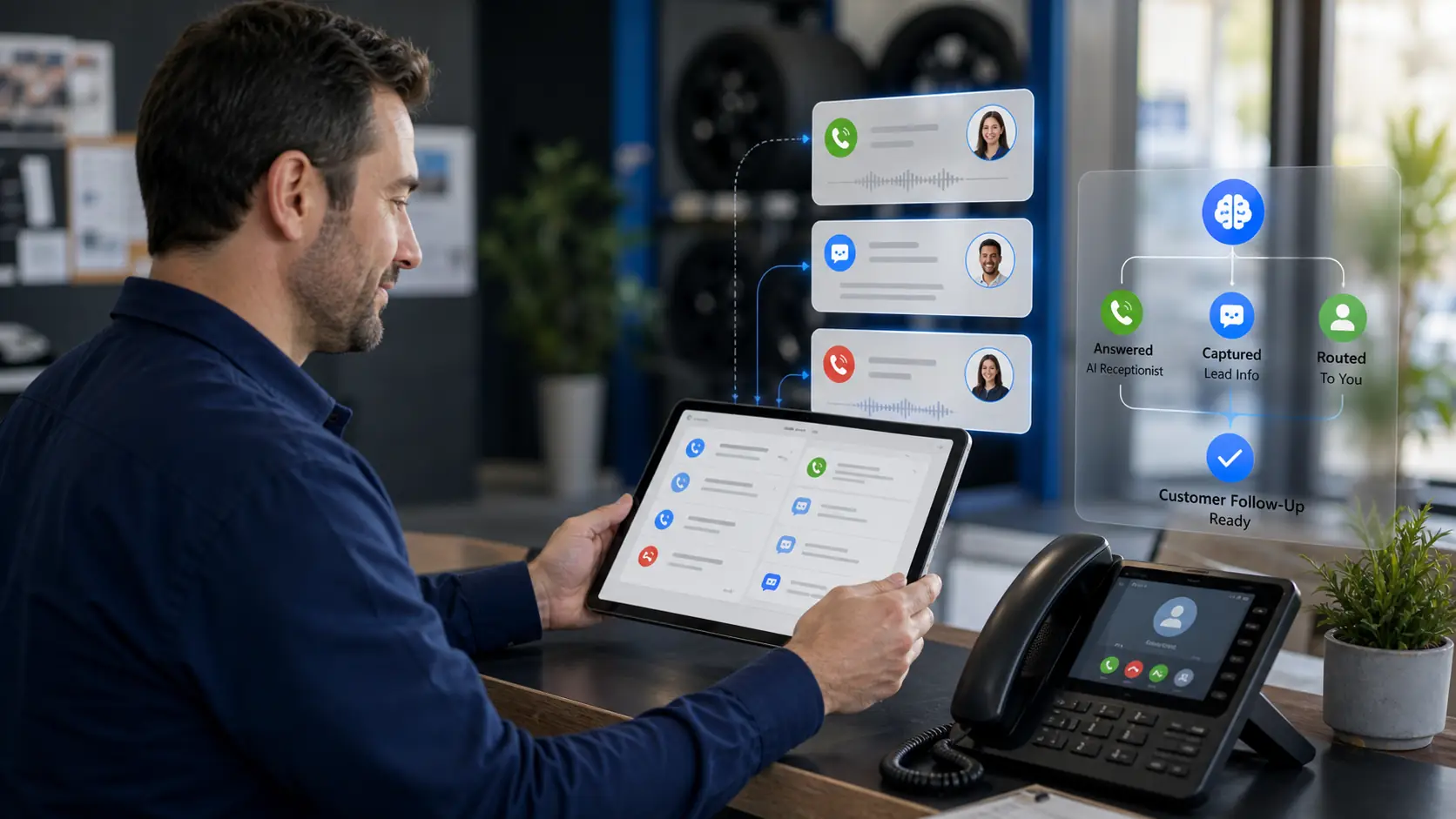
AI voice reception is an intake and routing layer
AI voice reception answers approved call types, gathers useful details, and moves the caller toward a defined next action. For a service business, that action might be a message for the office, an appointment request, an urgent escalation, a call-back task, or a transfer to the right team. The useful part is not simply that a voice answers. The useful part is that the call produces organized information the business can act on.
A strong setup begins with the same questions a capable receptionist would need answered. What service does the caller need? Is the request new or connected to existing work? How urgent is it? What is the best contact information? Who should receive the request? The workflow should collect only the information required for the approved next step.
The call flow should match the real business
A plumbing company, law office, repair shop, and property service company do not handle calls in the same way. Even businesses in the same field may use different service areas, schedules, escalation rules, and intake requirements. AI voice reception therefore needs a documented call map instead of a generic script.
Start by listing the common reasons people call. Group those reasons into a small number of paths, then define the questions, confirmation language, and destination for each path. A new estimate request may need service type, location, timing, and contact information. An existing customer may need a job number or service address. An urgent safety issue may require immediate transfer or a clear emergency instruction approved by the owner.
Good reception separates capture from commitment
The reception workflow should not promise an appointment, price, arrival time, service availability, or outcome unless the connected business system can confirm it. Capturing a requested time is different from confirming that time. Taking details for an estimate is different from quoting a final price. Clear language protects the customer experience and keeps the follow-up team from correcting expectations later.
This distinction is especially important after hours. The system can acknowledge the request, collect the facts, explain the approved next step, and set an honest expectation for follow-up. It should avoid pretending that a person has reviewed the request when that has not happened.
Human handoff remains part of the design
AI reception is most useful when it knows when to stop. Complex billing disputes, distressed callers, unusual technical questions, emergencies, and sensitive account matters may need a person. The owner should define which signals trigger transfer, escalation, or a careful message instead of leaving that choice to an open-ended conversation.
The handoff should include the caller's name, contact details, reason for calling, answers already collected, urgency, and the requested next step. That context reduces repetition and helps the person receiving the request respond with a clear understanding of what happened.
Plan the operational follow-up before launch
A captured call has little value if nobody owns the next action. For each call path, decide where the record goes, who receives the notification, how quickly the team intends to review it, and what marks the request complete. The destination might be a shared inbox, customer record, scheduling queue, callback list, or approved business dashboard.
Test the complete path with realistic examples before publishing the phone workflow. Include ordinary requests, incomplete answers, background noise, callers who change topics, repeat callers, and requests that should escalate. Review both the caller experience and the record delivered to the business.
- Document the most common reasons customers call.
- Define the minimum questions required for each call path.
- Separate requested times and estimates from confirmed commitments.
- Assign a person or team to every routed next action.
- Test ordinary, urgent, incomplete, and out-of-scope calls.
The goal is a usable next step
AI voice reception should make the phone easier to manage without hiding what happened. The business should be able to see why the customer called, what information was collected, where the request went, and what needs to happen next. When the website, phone path, and routing rules are planned together, callers receive a consistent front door and the business receives cleaner follow-up.