
After-hours visitors still arrive with a real task
A service business website continues receiving visitors when the office is closed, the team is on a job, or the phone is already busy. Those visitors may want to know whether the business handles a certain service, request an estimate, ask about availability, report a problem, or decide whether to call another provider. A static contact form can collect a message, but it cannot guide the visitor through missing details.
AI website chat can provide an approved first response and ask a short sequence of relevant questions. The goal is not to imitate a full sales conversation. The goal is to capture enough accurate information for the business to understand the request and take the right next step.
A useful chat flow starts with intent
The first job is to identify what the visitor is trying to accomplish. Broad choices such as request service, ask a question, discuss an existing job, or contact support can guide the next questions without forcing every visitor through the same script. Once the intent is clear, the chat can ask only for the details that matter to that path.
For a new service request, useful details may include the service needed, location information supplied by the visitor, timing, urgency, name, phone number, and email address. For an existing customer, the system may need a service address, job reference, or a description of the current issue. The owner decides what is appropriate and which information should never be requested in chat.
Progressive questions reduce abandoned conversations
Long forms often ask for everything at once. A conversational intake can request one clear item at a time, explain why it is needed, and adjust when the visitor does not know an answer. That makes the process easier to complete on a phone and gives the business a partially useful record even when the visitor leaves before the final step.
The conversation should confirm important details before submission. Repeating the phone number, email address, service type, or requested time helps catch errors. The system should also state whether the request is confirmed, pending review, or simply received for follow-up.
The chatbot needs boundaries
After-hours availability does not mean the chatbot should answer every question. It should use approved business information, avoid inventing prices or policies, and route sensitive or uncertain issues to a person. Emergency language, account problems, payment disputes, and unusual technical questions may require a dedicated response rather than a general lead flow.
The owner should review the visible welcome message, privacy language, escalation wording, and unavailable-service response. A clear boundary is more useful than a confident but incorrect answer.
Lead capture is incomplete without routing
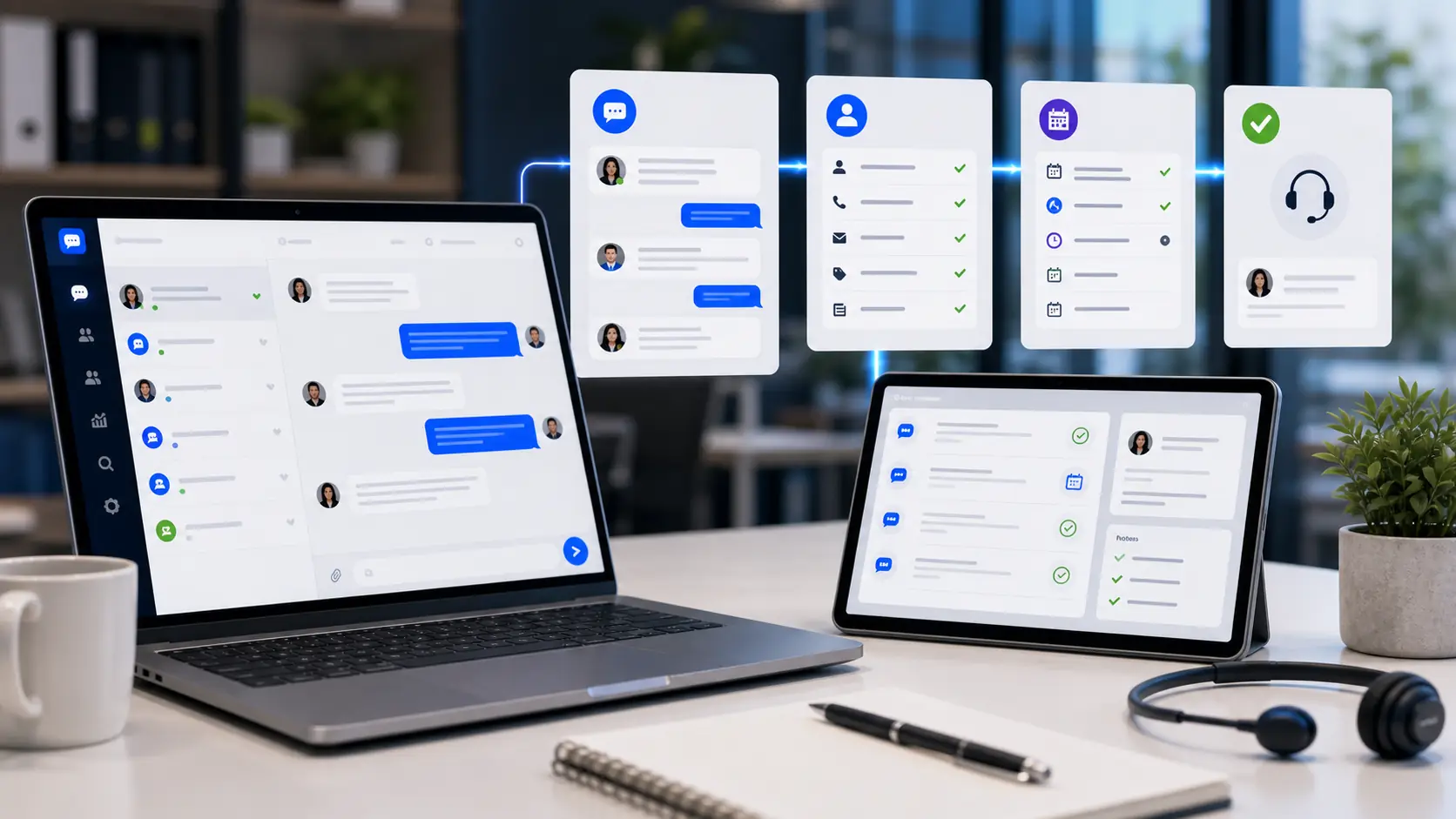
Once the chat gathers the request, it should create a record that the business can find. That record should show the visitor's intent, answers, contact details, conversation summary, source page, and requested next step. Routing rules can then send it to the owner, scheduler, sales queue, support team, or another approved destination.
The visitor should receive a concise confirmation that reflects what actually happened. If the request is waiting for review, say so. If a call-back was requested, confirm the request rather than promising a specific call time. The business should also know who owns the follow-up and how the record will be marked complete.
- Identify the visitor's intent before asking detailed questions.
- Collect only the information needed for the approved next step.
- Confirm important contact and service details.
- Use explicit boundaries for pricing, emergencies, and sensitive issues.
- Route every completed conversation to an accountable destination.
Measure whether the chat creates useful work
Conversation count alone is not enough. Review how many chats contain valid contact details, how many produce a service request or appointment interest, which questions cause visitors to leave, and whether routed records receive follow-up. Those observations help refine the questions and remove steps that do not improve the lead.
A well-planned after-hours chat gives visitors a clear way to explain what they need and gives the business a structured place to begin the next morning. It supports the customer path without pretending the office is staffed when it is not.